What does the future hold for security institutions like NATO, the UN or the EU?

What does the future hold for security institutions like NATO, the UN or the EU?

  • NATO
  • Security institutions
  • European Union
  • United Nations

Guest(s): Philippe Boutinaud, retired French army officer,senior security and strategy advisor

In this episode, we speak to Philippe Boutinaud, a retired French army officer known for commanding the Paris Fire Brigade in charge of civil protection and security in Paris. Philippe is also currently a senior security and strategy advisor at DCAF. He talks about the future of security institutions like NATO, the UN or the EU.
 

Key takeaways
  • International institutions like NATO, the EU, and the UN were created after World War II with distinct roles—military security, economic prosperity, and global diplomacy—to protect populations. 
  • These organisations have been largely effective but struggle to adapt quickly to modern, fast-changing threats like hybrid warfare and political instability. 
  • Today’s biggest security challenge is less about territory and more about influencing populations, opinions, and decision-making.
     
Download Transcript PDF
Maritie Gaidon
Welcome to Shaping Security, the podcast where we put security governance at the heart of the conversation and update you on today's security challenges. Today with me is Philippe Boutinaud, a retired French army officer known for commanding the Paris Fire Brigade in charge of civil protection and security in Paris. Philippe is also currently a senior security and strategy advisor at DCAF, working with me and today we'll talk about the future of security institutions like NATO, the UN or the EU.
Welcome, Philippe. Thanks for being here.
Philippe Boutinaud
Welcome, Maritie, and thank you for inviting me today.
Maritie Gaidon
You're welcome. So these big international security organisations and institutions are constantly being questioned. Are they effective?
Are they spending too much? So let's start with a question that many of our listeners are asking themselves. How do these institutions serve the security of the population?
How do they protect citizens?
Philippe Boutinaud
So first of all, thank you very much for your question. I think it's important to speak about those organisations now and to keep in mind that each of these institutions or organisations has its own specificity and the common point or the common characteristic was the fact that they were established after the Second World War and the purpose of each of them was different, but basically it was the protection of the population. So we have also to keep in mind that when we question the importance or let's say the reliability of those organisations, first of all, it was created after two world wars with a huge trauma for humanity and the high expectation of the populations, either in Europe or elsewhere, was also to avoid that this tragic period of human history would never be repeated in fact.
So I think we need to keep in mind that for each of them, they have a very specific purpose and NATO, for example, if we start with NATO, was created in 1949 and the aim was ensuring the security of the European continent. It is currently the most powerful military alliance in human history and we are currently 32 members in NATO, but we started with 12. So it is also important to realise what was the, let's say, the evolution of this organisation to protect the population and interestingly, the initial ambition was to protect the Western Europe liberated by the allies and especially by the United States from the expansion of the USSR toward the West.
And that is the heart of NATO and this is still valid. The basic principle is the collective defence and the cornerstone of the alliance is the Article 5. We repeatedly refer to the Article 5 of the North Atlantic Council and this article is considered as a guarantee for each member state that any aggression against one or more members will be considered as an attack against the 32 countries.
And after 77 years of existence, NATO mission has been to ensure the security of the continent and it remains the same. So not specifically by fighting, but by deterring any aggressivity or any aggressor to fight or to attack the European continent or North America. I just want to recall that this Article 5 was only evoked only one time in NATO history.
It was after the terrorist attack in 9-11, so in 2008 when the terrorists attacked New York and Washington DC. So it is important to repeat that also. And we can say that the purpose of this organisation was to protect people and it has worked.
The Cold War ended without fighting, without shooting or without declaring war and the European continent until now has been protected. So we can also consider that among the members, among the 32 members, you have Turkey and Greece, for example. I'm not entirely sure that without Turkey and Greece in the same military organisation, we would have not run the risk of a war between those two countries.
So NATO was, let's say, an organisation of stability of the European continent. So the second story of that must be also compared to what the EU is. The European Union was established in 1957, but for a different reason.
It was to provide prosperity to the citizens. So security for NATO, prosperity for the European Union.
Maritie Gaidon
Yeah, a different angle.
Philippe Boutinaud
Absolutely. And this is still valid when we ask the European Union to protect the continent militarily. It's a bit of nonsense, especially when you take into consideration the current treaty, the Lisbon Treaty specifically, explicitly mentioned that we cannot use the funds, the resources of the European Union for defending the continent.
And precisely because this is the mission that has been assigned to NATO. So obviously now, with the current international situation, with the debate on the Article 5 on the reliability of certain allies, this is a question. But the purpose of the EU was to protect the population economically, politically, financially, but not specifically militarily.
So next year we will celebrate in 27, we'll celebrate the 70th anniversary of the European Union community, because at the beginning, it was not the European Union. The European Union came in 2009 after the Lisbon Treaty. And I think it's a good age to re-examine what is the purpose of the EU.
And if we collectively need to develop other aspects of the prosperity, how do we protect our prosperity collectively? And as Jean Monnet, one of the founding fathers was saying, nothing is possible without people, but nothing lasting is possible without institutions. And I think this is the heart of the European Union, having institutions at the level of the continent to put in common what we could be, we were unable to realise on our own.
And this is this communality is probably one of the most important strengths of the EU. And also the EU had the ambition to move the rivalry among the nations from the military questions to the economical, financial, and other questions like that. So in the mind of Europeans, it is very difficult to imagine that the Germans could fight the French, for example, but it is very new in the history.
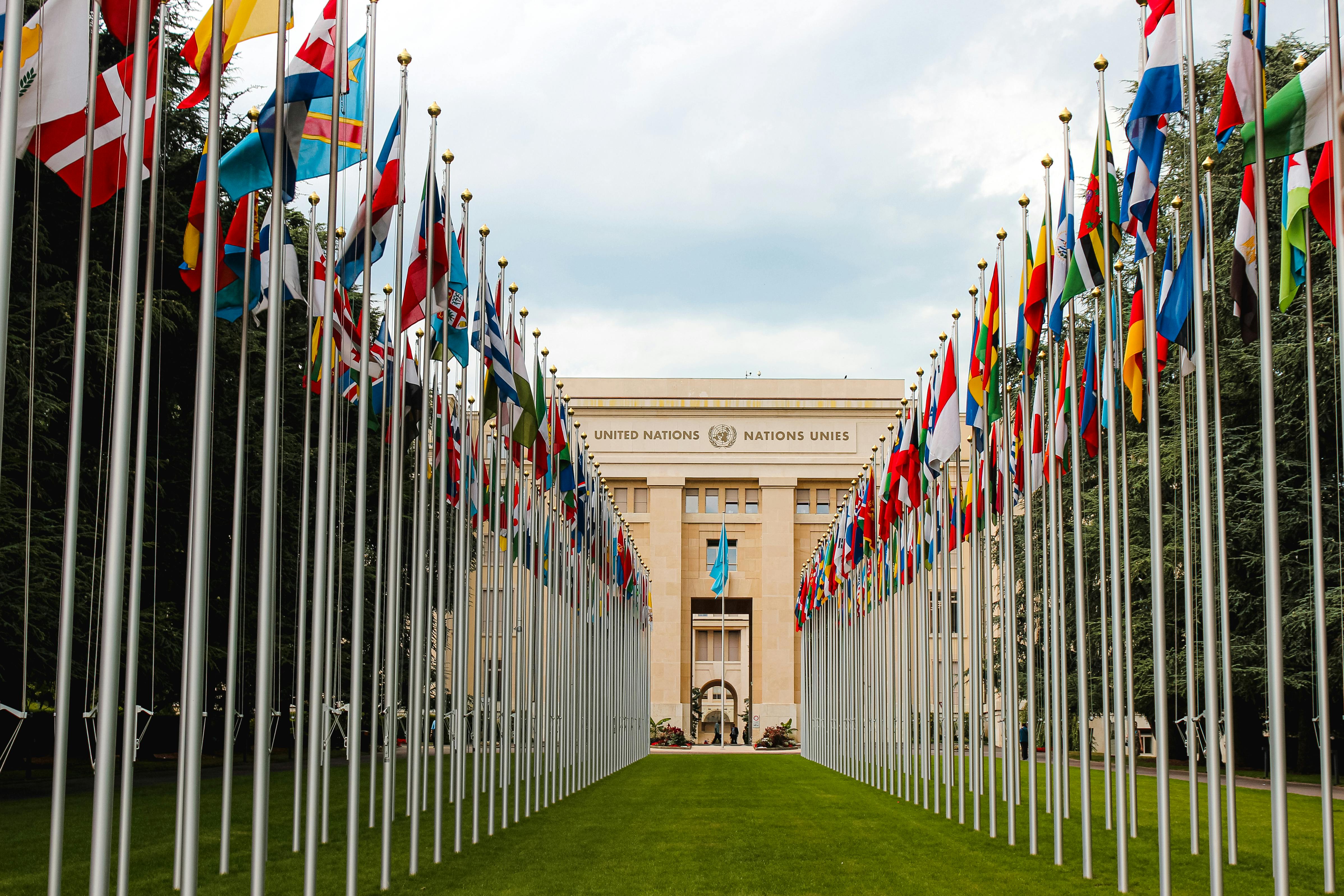
If you compare to the previous millennium, for example, for the UN, it's another story. It's also a long story that started at the beginning of the 20th century, when the US president decided to establish the League of the Nations. And the ambition was to create a forum for discussion to avoid the war and not to repeat the First World War.
But it was obviously a failure because we had the Second World War. And that it is also interesting to compare what was the evolution of the international debate before the Second World War, questioning or, let's say, contesting the authority of the League of the Nations. But after the Second World War, the project, initial project was transformed and we created in 1945 the United Nations.
So the purpose of the United Nations is to create the condition for international debate and to declare through the charter of the UN Charter that the war is illegal. And if we have, let's say, a question of security to be discussed, there is the UN Security Council made for that. So that was also the ambition of the UN, to protect the population, to avoid, let's say, the resolution of conflict by wars, but simply by discussion, by diplomacy, by, let's say, pressure from the international community to avoid having new wars local.
But in reality, it was very difficult because many, many nations in the world were continuously fighting. It was not the case for the biggest country, but it is not because of the existence of the UN. It's rather by the existence of, on one side, NATO, on the other side, the Warsaw Pact.
We avoided, until now, the Third World War. So the UN now serves the same interest at the very beginning of its establishment. First, the peacekeeping, we deployed a lot of missions in the world since 1948.
You have to keep in mind that we deployed more than two million UN soldiers in the world in a bit more.
Maritie Gaidon
That's a lot.
Philippe Boutinaud
It's a lot, yes. There is also the conflict prevention. And the conflict prevention was, let's say, the raison d'être of the UN Security Council.
But now, with one of the permanent members having declared the war in Ukraine, it is difficult to have a consensus in the UN Security Council, obviously. And the third aspect of the UN was the humanitarian protection. So you see through those very rapid and very, let's say, minor example that the ambition was to protect the population for each of the organisations.
But at the end, one is for military questions, the second is for the financial, the economic questions, and the other one is for the entire world, finding solutions to discuss rather than fighting. Now the situation has considerably evolved, and the conditions for the dialogue are more difficult than before. And simply because probably all the founding fathers of those organisations have died, and a new generation, without absolutely no experience of war, has taken the lead in different countries.
So it's the comeback of the great empires, and that is very worrying for us.
Maritie Gaidon
That's interesting. Actually, I had a question about the example of the European Union, how it works and what would really happen, you know, regarding like what impact would this have on security if the funding of the EU stops. But you kind of mentioned that EU is more about prosperity.
So do you still want to add more to this question, or should we move to the other one?
Philippe Boutinaud
It's an interesting question. I spent some time in the European Union. I was director of cabinet there some years ago.
What is interesting, through my personal experience, is the fact that each time there is a success, our national political leaders say it's thanks to them. When it is a failure, they accuse the European Union to be guilty. Maybe I'm a bit short in resonating, but you can also take this example and develop it through many, many different concrete examples of the current situation in Europe.
I think first, the European Union is a success. Obviously, after almost 70 years of existence, we need collectively to think if we are adapted to the new challenges of the world, the current challenges. But the reason why we established that was to be more powerful, and that remains exactly the same purpose.
Second, do you think that in the current world, if we are totally separated, independent and so on, what could be the weight of France? What could be the political weight of Germany or maybe other countries like Poland, like Italy, Spain and so on, without the European Union? The second point is that at the individual level, if you consider what does it mean being European?
Many people on the continent have not a great feeling of being Europeans in the sense that they are first of their own nationality and second, they belong to Europe. But the day you start challenging the continent, all those people feel themselves more attached to the European continent than another one. And if you take, for example, the current example of Greenland, the Greenlanders want to be independent, but if you challenge their nationality, they prefer to remain Europeans than becoming Americans, at least if we follow the survey that are made currently.
Just to finish on this point, I think that if you imagine a situation when you switch off the European Union for two weeks, all the citizens of our continent will realise how it is important in their daily life being a member of the European Union. No more Erasmus programme. It's the comeback of the borders.
When I was young, to cross the border between Luxembourg and France or Belgium and France, it took two hours. It was the same for Spain or Italy. Now for the new generation, it's very easy.
You take your car and you go through the continent freely. I mean, this is a great achievement. And if you consider the possibility of, let's say, existing among the big powers, if we are together, we are stronger than if we are isolated.
At least I believe.
Maritie Gaidon
Yeah. Just at the beginning, you also mentioned that the world is really different compared to when the institution has been established and now. My question is like, how can these institutions adapt to wars and conflicts that have completely changed since they were established?
How, for example, they can deal with hybrid threats or crises that drag on over time?
Philippe Boutinaud
Thank you. It's also a very tricky and very interesting question. And in fact, the international institution or organisations alliance can only adapt to modern and long lasting conflict by changing how they think, they organise, they decide, they act and so on.
The most important characteristic of our period of time is the fact that things are changing every week or every month. Interestingly, you know, when in the military system, we write the white book or the National Defence Review, whatever the name is. At the beginning, we were writing books for 20, 25 years.
Now, when you write this kind of book every two years, you have to refresh the document. And you are never sure that when you are signing the last version, the week after it will be still valid. One week you have a military operation in Venezuela, the week after it's the revolution in Iran.
One month ago, it was another story. We have still the war between Russia and Ukraine and so on and so forth. So what we were considering as, let's say, a strategic change is happening every six months and changing also the future.
So the reality for those organisations and one of the key points is the decision by consensus. But the consensus is rich when you have shared view, shared value and after long discussions. This is incompatible with the level or let's say the level of reaction or the speed of decision we need to react to those kinds of threats.
And also, what is interesting is that you were powerful centuries ago when you had a huge country. It is no longer the case. You can be rich even if you are living in one isolated island somewhere in the middle of the ocean.
And interestingly, let's say the perception of what is the success militarily and diplomatically speaking, it is not specifically to be able to conquer one or two or three or four or five blasts in Ukraine, for example, but it is the possibility of controlling the population, having access to the way they consider their future, influencing their elections and so on and so forth. And this is a hybrid threat. And this is the main threat for Western societies now.
And especially the way we can organise the decision in those organisations is also the fact that we need to adapt. Are we sure that we have the appropriate tools to react? Are we sure that we have the appropriate body to discuss?
Are we ready collectively to decide that one person on one specific body will decide for the rest of the countries, the member states of an organisation? If you consider that you are threatened by ballistic missiles that will take between 10 and 20 minutes to reach one of the capital city, are you sure that you can decide in a body gathering every week for two hours? So this is the kind of questions, very challenging questions.
And frankly, I have not the response because it is very difficult for a country to, in the brackets, abandon his capacity to decide on his own and to, let's say, to subordinate the decision to another body. How many countries in Europe are ready to accept that, for example, the European Council decides for each of the nations? It is exactly the contrary in the public debate.
And that can be instrumentalised by our enemies. Because if we put in the debate at a time we are all conscious, we are all realising that we need to decide very rapidly. But at the same time, if you want to protect your freedom of decision, your autonomy of decision and so on, this is a bit incompatible with the fact of being a member of a club, especially when you have 27 or 32 members that have the same voice in the discussions, for example.
Maritie Gaidon
Yeah, it's a complex challenge. And yeah, what would be the solution? What would be required by, let's say, 2026 to reinforce the position of this type of security organisations?
Philippe Boutinaud
Once again, it's a tricky question. And it is of an eminently political nature. The sensitivity of the issue stems from uncertainty about the strength of certain alliances and the predictability of certain allies or certain leaders also.
So I could say that, for example, for the EU and NATO, there is the need to reaffirm clearly a shared perception of what is the threat, where is the threat. And that must be a strong debate among the member states. Do we consider terrorism, Russia or cyber threats or common threats?
Again, all the Western interests, yes or no. And the current organisation of NATO is seen as adapted to the current and the next threat, yes or no. The second point is we need to reduce the international divisions. In every club.
If you play football, for example, you know that if you have divisions in the team, you will lose the match. And it is clearly in the interest of our challengers to create those divisions. And that also must be influenced.
So there is sort of continuous discussion to protect those kind of institutions from doubt. Because the doubt is synonymous of weakness. And also, I think that it's the reaffirmation of a consistent political will to act collectively, recognising that, OK, we need to protect our, let's say, autonomy.
We need to protect our traditions. And I'm fully respective of the traditions. But at the end of the day, this is not entirely compatible with the adaptation to the threat or, let's say, the new risk in the world.
So I think, first, the point is that if we have and we reaffirm that we have current value, in that case, we need to respect international law. And that also must be repeated continuously. The international rule of law is not weak.
It is also a tool to avoid the new trauma that we have experienced during the 20th century. And it is not just a question of words, also a question of act, recognising that we have references to respect of international law. For NATO, for example, reaffirming that we have a common view of what is collective defence is to say clearly, Article 5 remains valid.
Any attack against one of the 22 members will be considered as an attack against all of the member states. If you introduce the doubt on Article 5, you can question also what is the utility of NATO in that case. And it is not just a question of saying that the United States or another country could, but if we introduce the fact that one of the 32 nations, including Iceland, you know that Iceland has no military, no army, but they are members of NATO.
If Iceland can say, I will not engage or will not offer the possibility of my military infrastructure in case of war in Europe, you question, let's say, the solidarity of the allies. And that is key. If you want to protect or at least to maintain a certain level of often predictability of our action, because also the protection or the deterrence goes through the fact that you are unpredictable.
For the UN, what is important is to adapt probably the structure, the political body, especially the UN Security Council. The UN Security Council and the fact that five members have the possibility of veto must question. Why Asia, why Africa, why Latin America have not a permanent seat at the UN Security Council. This is a long debate.
It is not new. But I mean, if we want to represent what are, let's say, the key questions in terms of security, in terms of protection of human rights and so on, in that condition, the most populated continent of the world must be permanently represented in such kind of body. It is not even a political question.
It's a question of balance, of equality, of consideration of the populations in the world. And for the EU, it's time for increasing the military budget. Interestingly, the pressure is made by the United States on the Europeans.
But now it is also a question of being able to defend our continent with our means, with our capabilities, with our military, with our population. And so we are very lucky to be free. In fact, if we want to continue to be free for the next centuries, that has a cost.
And the cost is to have military structure, well-prepared, organised, funded, in order to react when something very serious happens against our freedom.
Maritie Gaidon
It's a very nice way to conclude, I have to say. We are out of time now. I want to thank you, Philippe.
It was really, really nice to have you here. I can see that your long experience in the security sector has made a huge difference. And I'm glad you shared so many insights with us.
They were concrete. They were clear. Like, for example, when you mentioned Article 5, the example of Greenland, Turkey. There are really good quotes in what you say.
You know, like, it's not a question of fraud. It's a question of act. Thanks a lot for your participation.
Philippe Boutinaud
You're welcome. Thank you. It was also a pleasure for me to exchange with you.
Bye-bye.
Maritie Gaidon
Now, let's move on to the second part of the show. I want to share two videos with you. The first is about NATO, and the second is about the UN80 initiative.
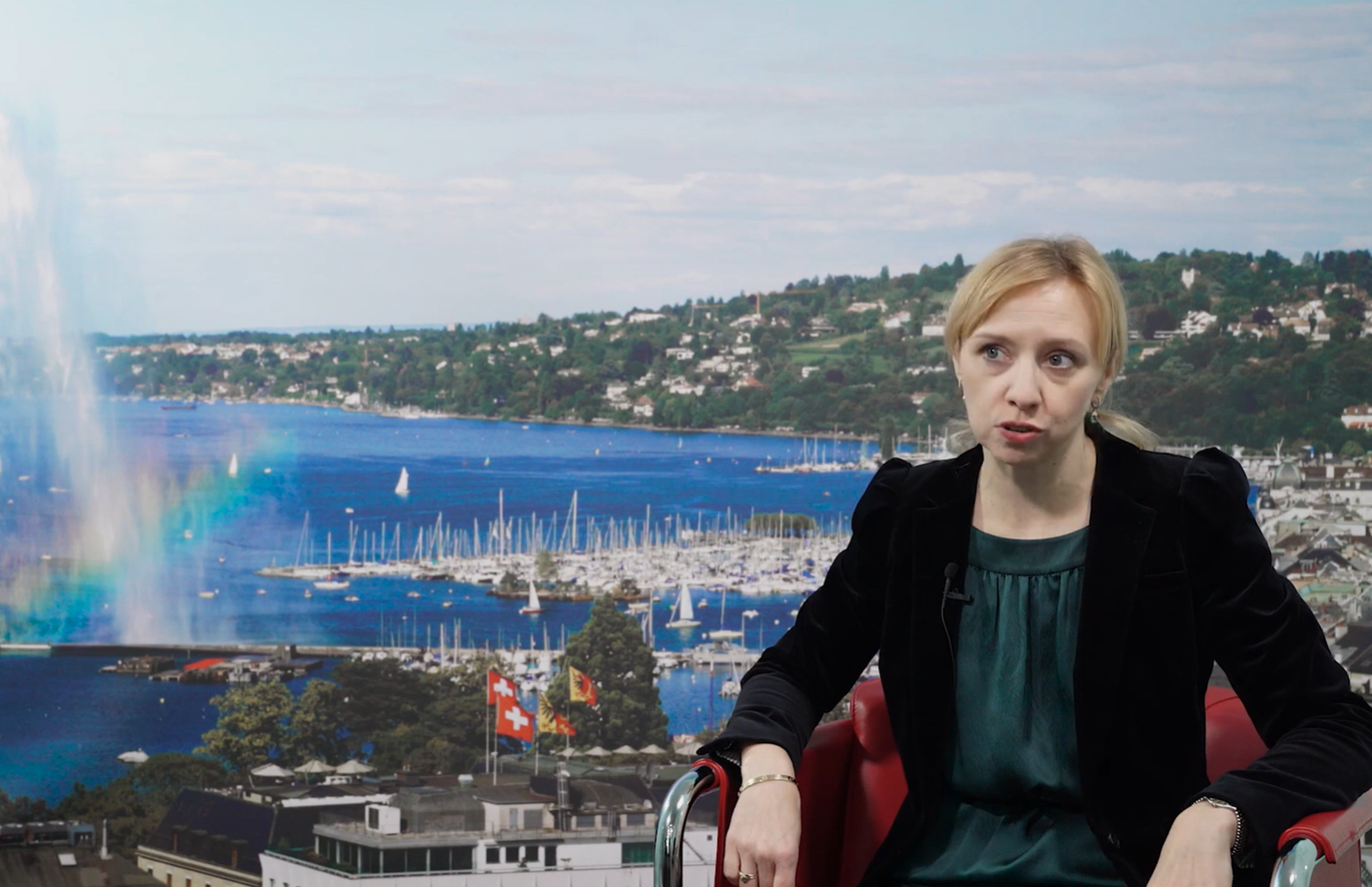
The NATO video was made by the Geneva Centre for Security Policy, a sister centre of DCAF. A little kudos to our friend at the GCSP. Hi, GCSP!
The guest of the video is Allison Hart. At the time of filming, she was deputy head of the Human Security Unit at NATO. She is now NATO spokesperson and director of the Office of Strategic Communications.
The video was released several years ago and explained the basic principle of NATO, so it's still relevant. Allison Hart talks about what NATO is, how it has evolved, and the challenges it faces. She sums up the vision with the following sentence, Peace is important, and we can achieve more by working together.
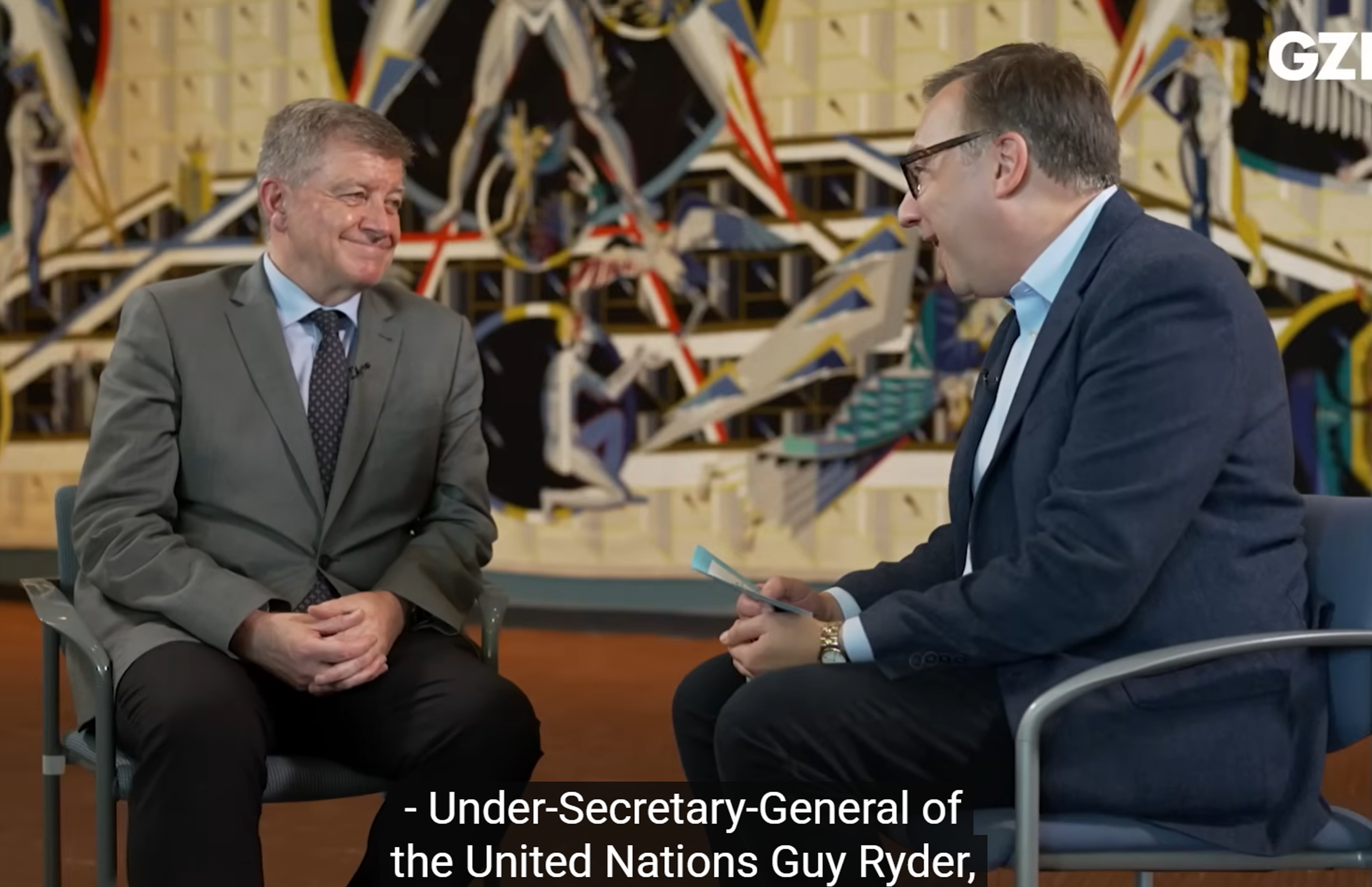
The second video is a brief interview with Guy Ryder, who is the UN Under-Secretary General. He discusses how to deal with today's global security challenges, the UN financial constraints. He also reflects on the 80-year mandate, the work the UN has done, and how it has been carried out.
His message is clear. The question is not whether the UN's mandate is good, but whether the world is ready to pursue it. Also, it's only 17 minutes long.
It addresses the question that everyone has about what is happening at the UN right now. Well, that's all for today. If you enjoyed the show, please share it with a friend.
And don't forget that you can find these resources and more related to today's topic at dcaf.ch. Thank you for listening to Shaping Security, the podcast where we put security governance at the heart of the conversation and update you on today's security challenges. If you enjoyed the podcast and would like to support us, please share it with a friend or leave us a review on your preferred podcast platform. You can find out more about DCAF on our website and our social media channels.
We also have a monthly newsletter that shares the latest resources. Don't miss the next episode of Shaping Security.
Recommended resources:
Close

Download this quote and share it on your preferred social media network.