How can peace operations evolve to respond to today’s challenges?
 Share on Facebook
 Share on Linkedin
 Share on Twitter
UN Peace Operations face more complex challenges than ever. Yet they are expected to achieve more with tighter resources, making their mandates increasingly difficult to fulfil.
These challenges require reflection and action. On 22 September 2024, the General Assembly adopted the Pact for the Future that requested the UN to conduct a review on the future of its peace operations.
A core question for this review will be: how can peace operations evolve to be more effective, people-centred, and responsive to modern-day challenges?
At the heart of this evolution are three mutually reinforcing agendas: Security Sector Governance, Protection of Civilians, and Women, Peace and Security. They offer a blueprint for peace operations to safeguard populations today, while laying the foundations for tomorrow’s long-term stability.
SECURITY SECTOR GOVERNANCE: BUILDING FOUNDATIONS FROM DAY ONE
Many of the root causes of violence stem from dysfunctional or abusive security institutions. Effective, accountable, and inclusive security sectors help prevent conflict (or its relapse) and build trust in public institutions.
To strengthen UN peace operations, there is an opportunity to ensure that security sector governance (SSG) is integrated early rooted in an understanding of the causes of conflict, rather than being introduced at later stages or in isolation.
Lessons from recent missions underscore that sustainability must be built in from day one, including ensuring that peace operations hand over security responsibilities to capable institutions. This requires establishing SSG capacity early in the missions, and coordinating with national and local actors on integrating SSG in national development and budgeting processes. Doing so is essential for reforms that are nationally-owned, strategically aligned, and financially sustainable.
PROTECTING CIVILIANS: FROM RESPONSE TO SUSTAINABLE PROTECTION
Protecting civilians from violence remains a defining task of peace operations and a key measure of their legitimacy.
Civilian protection is a humanitarian imperative and a long-term investment in stability. Yet unprecedented financial constraints have directly affected peacekeeping operations, contributing to a surge of 40% of civilian casualties globally in 2024. Missions have been scaled back, even though they remain vital mechanisms for prevention and protection, particularly in volatile environments.
Field experience shows that early-warning systems, community alert networks, and joint analysis with local actors have saved lives and fostered confidence in peacekeepers.
Effective protection requires the ability and will of local authorities to assume responsibility over time to ensure that security is both delivered and owned by the people. This has a key implication for missions: a shift from a reactive to a preventive approach – prioritising early support to national institutions so they can gradually take on responsibility for protecting civilians.
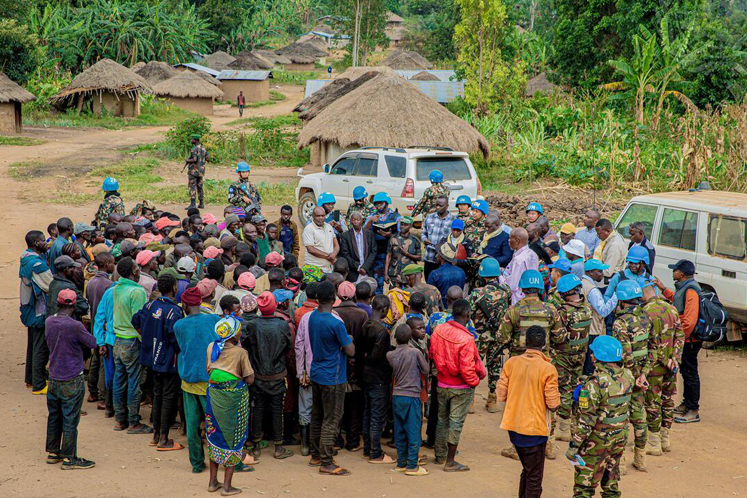
Sensitization missions for tribal communities in the Democratic Republic of the Congo.
Photo: United Nations
ADVANCING GENDER EQUALITY AND THE WOMEN, PEACE & SECURITY AGENDA
Promoting gender equality and the Women, Peace and Security agenda is equally integral to the success of UN peace operations. Mission performance is increased when a gender perspective is implemented at strategic, operational and tactical levels, and when women take part meaningfully in peace operations. It transforms protection approaches and broadens communication with communities.
Moreover, visible participation of women in security roles sends a strong message of inclusion, encouraging national institutions to embrace diversity in their own structures and operations.
However, gender parity must go beyond numbers. Improving women’s representation across diverse roles and leadership is key, and demands establishing an enabling environment (facilities, workplaces free of bias…), where everyone can contribute.
Peace operations must be gender-responsive to be fit for the future, and integrating gender equality and WPS principles in the design of peace operations must be a priority from the beginning.
INSIGHTS FROM GENEVA PEACE WEEK
These themes were discussed during the Geneva Peace Week 2025 peace panel “The Future of Peace Operations: Insights from Women, Peace and Security, Security Sector Governance, and Protection of Civilians”, co-organized by DCAF and CIVIC on 14 October 2025.
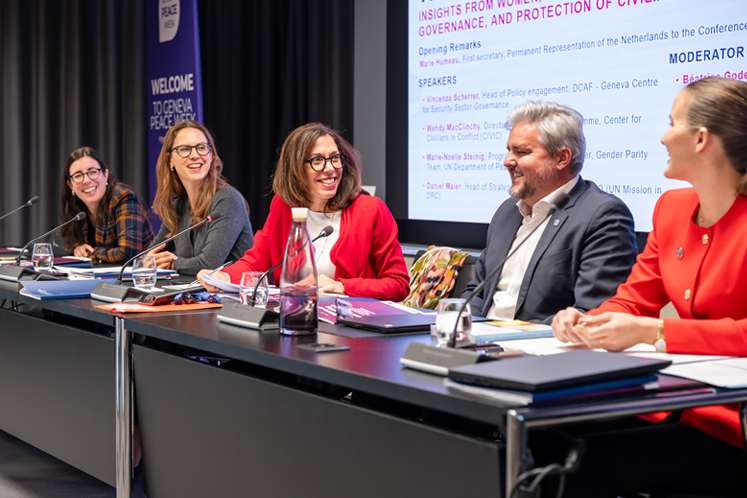
“The Future of Peace Operations: Insights from Women, Peace and Security, Security
Sector Governance, and Protection of Civilians”, a panel co-organized by DCAF and CIVIC
during the 2025 Geneva Peace Week. Photo: DCAF - Marc Charbonnier
Panellists emphasised that the three agendas form the backbone of effective peace operations, drawing lessons on how future peace operations can support these core pillars.
Key takeaways:
1. Keep core agendas at the center. Security Sector Governance, the Women, Peace and Security Agenda, and Protection of Civilians are essential for the effectiveness, success and legitimacy of UN Peace operations.
2. Maintain essential capacities. Ensuring sustained capacity for Security Sector Governance, the Women, Peace and Security Agenda, and Protection of Civilians is vital to remain responsive to political priorities and to support credible and sustainable transitions.
3. Leverage partnerships and diversify resources. Future missions will need to work more collaboratively, drawing on bilateral, regional, and civil society partners, while engaging more proactively with international financial institutions.
Watch the replay of the conference to get more in-depth information.
THREE CORE PILLARS FOR FUTURE PEACE OPERATIONS
Preparing for the future of peace operations demands clear priorities and urgency in the current context of financial constraints and mounting contestation of legitimacy.
Strengthening governance, protection, and gender equality will give peace operations their credibility and peacebuilding power.
The real question about peace operations is not whether missions should be large or small. It is about prioritizing interventions that make a tangible difference in people’s lives. - Vincenza Scherrer, DCAF Head of Policy Engagement.
Regardless of the type or size of a mission, peace operations must plan for adequate capacities to address human security challenges. They need to deepen partnerships with bilateral, multilateral, or civil society actors, and explore new financing sources, including with international financial institutions.
For national ownership to remain at the heart of peace operations, missions must encourage a strong sense of shared responsibility and accountability for progress between the UN and national and local actors. This is essential for both successful transitions and for building peace that lasts.