Training
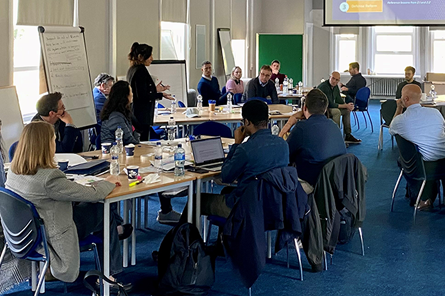
DCAF develops and provides tailored courses, interactive tools, and capacity building products on security sector governance and reform (SSG/R) to support our partners.
Our tailored courses are developed for international or national audiences with a focus on the concept, actors and contexts of SSG/R, and include inter alia themes such as preventing transnational organized crime, the prevention of violence and conflict (including violent extremism), defence and police reforms, gender equality and inclusion or disinformation.
Our training philosophy is based on mutual growth, peer-to-peer exchanges, and active participation. For this, we use interactive tools that include case studies, role games, thematic discussions and debates, expert exchanges, and digital tools such as Mentimeter, Slido or Kahoot.
Aside from our in-person course offer, we also offer virtual courses, e-learning tools and e-learning development, and support to organizations in reviewing training requirements, monitoring and evaluation, pre-deployment curricula, and more. We offer our services in English and French.
Coming courses are available on this page.
Workstreams/Projects
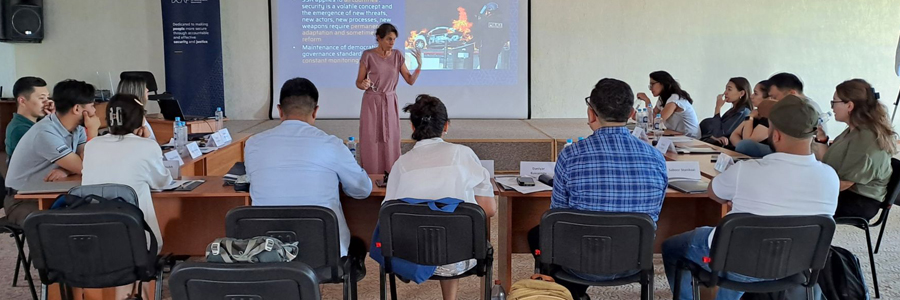
This flagship course provides participants with knowledge and practical tools on SSG/R through:
- Sessions on SSG/R, human security, access to justice, gender and inclusivity, and good governance, with a focus on both people-centered and state-centered security
- Optional focuses on themes such as (but not limited to) prevention of violence extremism, transnational organized crime, climate and environment, gender equality and inclusion, defence and police reform, international missions, and geographic focuses
- Incorporating participants’ experiences
- Multi-day strategic planning exercise
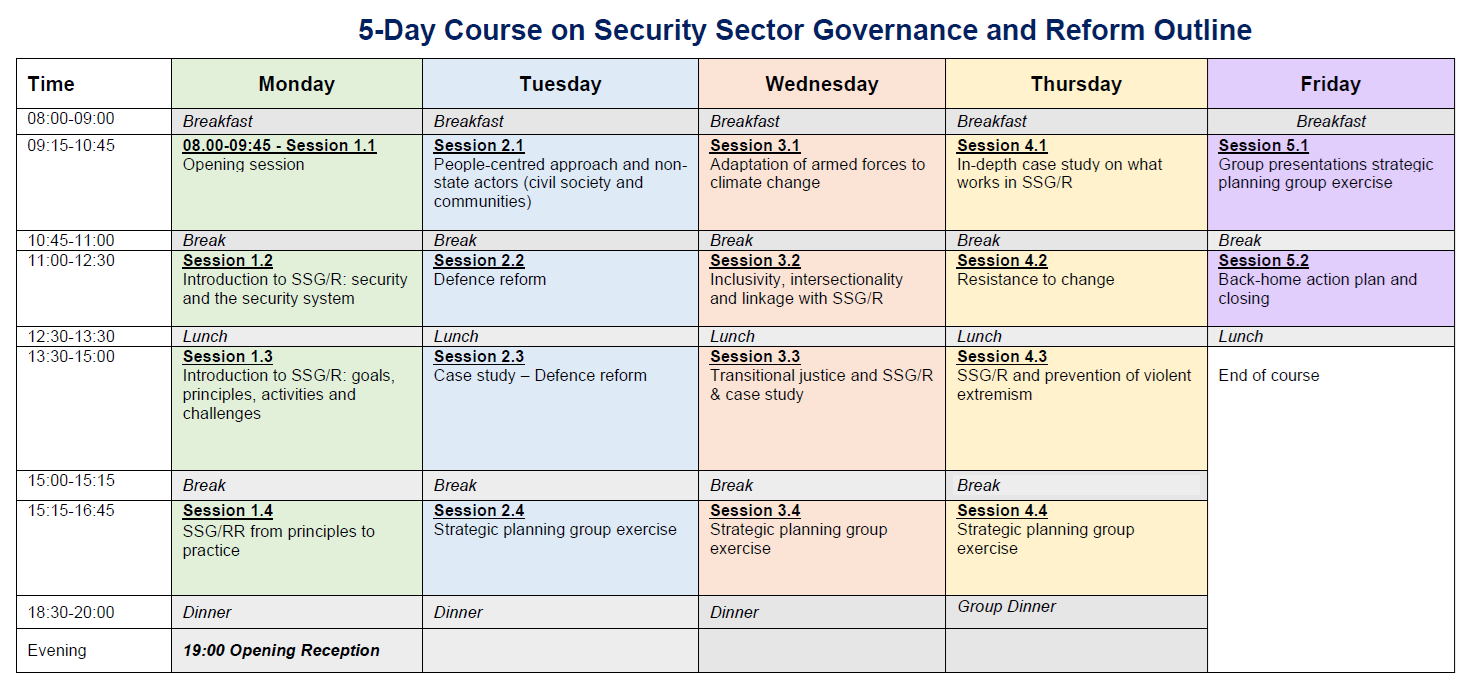
Example Agenda:
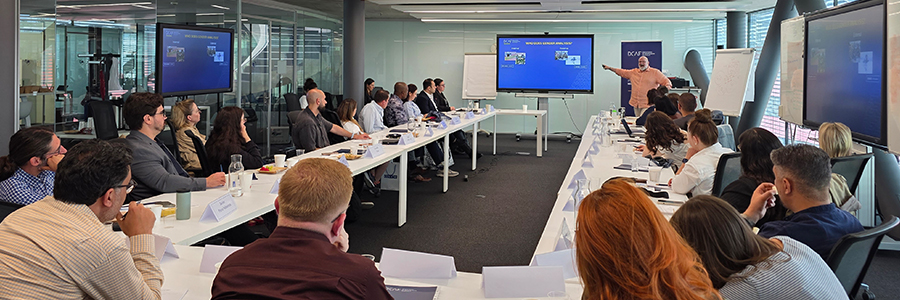
We provide tailored courses and sessions focused on security sector governance and reform (SSG/R) and adjacent topics. Our courses are available in English and French. Examples of tailored courses that we provide include:
- Thematic courses on SSG/R and gender equality, transnational organized crime, climate and environment, preventing violent extremism, defence reform, police reform, and justice reform. We also tailor courses to geographic context where relevant. All these courses can rely on DCAF’s in-house expertise.
- Virtual courses on SSG/R and the themes listed above
- Interdepartmental courses focused on improving collaboration on SSG/R between relevant supporting organizations
- Courses on key skills such as strategic planning, effective advising, training-of-trainers
- We provide sessions as part of broader curricula, such as pre-deployment training or mediation courses
If you are interested or want more information, please contact training@dcaf.ch.
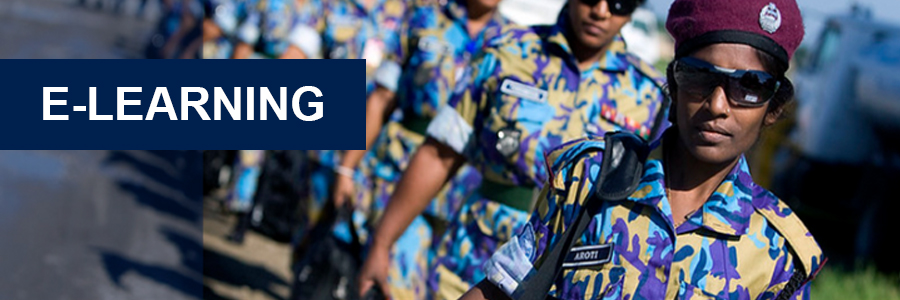
DCAF develops freely available e-learning courses, and also develops tailored e-learning courses on SSG/R and adjacent topics on demand.
This recently updated (2026) introductory course on security sector governance and reform provides participants with:
- Overview of SSG/R, its key principles, actors and contexts within which SSG/R takes place
- Insights from experienced practitioners and practical examples
- Political and technical aspects of SSG/R
- Outlines what is meant by a people-centered and holistic approach to SSG/R
In addition, follow the course "The environment and security sector governance and reform" to understand the connections between environment and SSG/R. It goes into topics such as:
- Environmental crime
- Natural disasters and climate change
- Environmental footprint of the security sector
- And several specific focus and cross-cutting themes
Both courses are available in English and French.
More information? Please contact training@dcaf.ch.
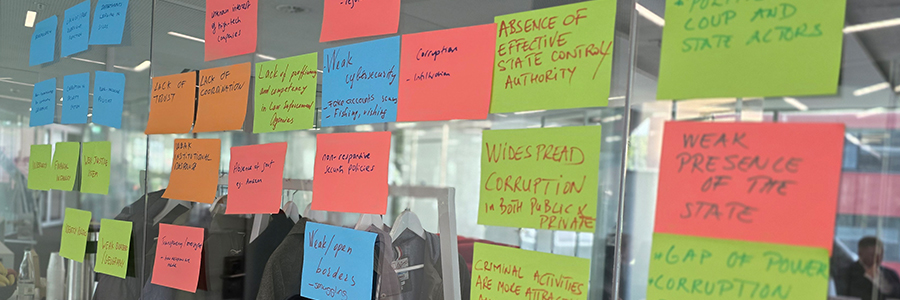
Aside from courses, individual sessions and e-learnings, we also organize roundtables, workshops, and seminars to share lessons and experiences, provide input in relevant conferences and support networking within the SSG/R sector, and work in joint ventures with training partners.
We work closely together with DCAF’s research and emerging security challenges team to make sure our courses benefit from up-to-date best practices, and integrate sessions on emerging or cross-cutting topics ranging from DDR and youth, peace and security to climate and environment as well as artificial intelligence and digitalization.
Professional development support and course support
Our experience in curriculum development for SSG/R and adjacent topics means that we can also contribute to revising existing curricula (online or offline) or pre-deployment training sessions. We have also conducted several training requirement analyses for the European Union’s Common Security and Defence Policy (CSDP) missions and contributed to a review of the internal benefits of contributing to international police missions.
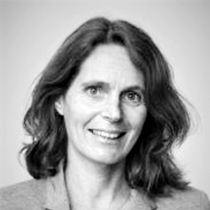 |
Marianne Ducasse-Rogier - m.ducasse-rogier@dcaf.ch Marianne has a background in international relations/peace and security and more than 25 years of experience working for international organizations, universities or think tanks in different countries. She has been involved in teaching and training since 2004 and enjoys combining her thematic expertise with her training and facilitation skills. Prior to joining DCAF in 2022, Marianne worked as a Senior Academy Fellow at The Netherlands Institute of International Relations “Clingendael”, where she contributed to the development of the Academy and managed the diplomatic training portfolio. She also worked inter alia as a guest teacher at Leiden University department of Political Science, as a consultant for IOM, and as an OSCE election supervisor in Bosnia and Herzegovina. Marianne has a Ph. D from the Graduate Institute of international and Development Studies, a DES from the same institute and a diploma from the Institut d’études politiques de Lyon. She speaks French, English and Dutch. |
|
|
|
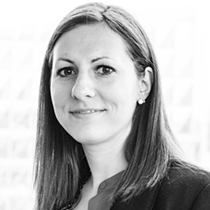 |
Eleonora Dan - e.dan@dcaf.ch Eleonora has over 10 years of work experience in managing projects and programmes for different companies and organisations. Prior to joining DCAF, Eleonora worked as Project Assistant for Merck's Access to Health Unit in Geneva. She also worked as a fund-raising volunteer for Emergency, an Italian NGO providing support to victims of war, landmines, and poverty. Eleonora holds a master’s degree in international public affairs from the LUISS School of Government in Rome, and a master's degree in international relations from the London School of Economics (LSE) and the School of Political Science at the University of Bologna. Eleonora is fluent in Italian, English, French and Spanish. |
|
|
|
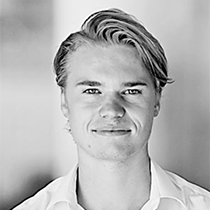 |
Floris de Klerk Wolters - f.deklerkwolters@dcaf.ch Floris is a Programme Manager for Research and Training at DCAF. Floris has co-authored publications on the security sector and health crises; climate and environment; youth, peace and security; and artificial intelligence. He has been at DCAF since 2019, and previously also worked for DCAF’s Asia-Pacific Unit. Floris has a master’s degree in international affairs from the Graduate Institute of International and Development Studies. Floris received his bachelor’s degree in liberal arts & sciences from University College Utrecht. |
|
|
|
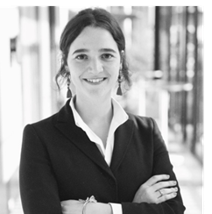 |
Magali Vennin - m.vennin@dcaf.ch Magali is a Project Officer for Research and Training at DCAF. She brings experience in policy analysis, research, and capacity-building programs. Previously, she served as a Regional Programme Officer with the United Nations Office on Drugs and Crime (UNODC) in Southeast Asia, based in Laos, where she supported initiatives aimed at strengthening governance and security. She also worked with the French government on crisis response, facilitating interministerial coordination during emergencies. Magali holds a master’s in public affairs from Sciences Po Paris and a bachelor’s in political science and economics from McGill University. She speaks English, French, Spanish, Italian and some Lao. |
PUBLICATIONS

Contacts
Marianne Ducasse-Rogier, Deputy Head of Research and Training and Senior Manager for Training (m.ducasse-rogier@dcaf.ch)
General enquiries (training@dcaf.ch)