How does trauma affect the human behind the uniform?

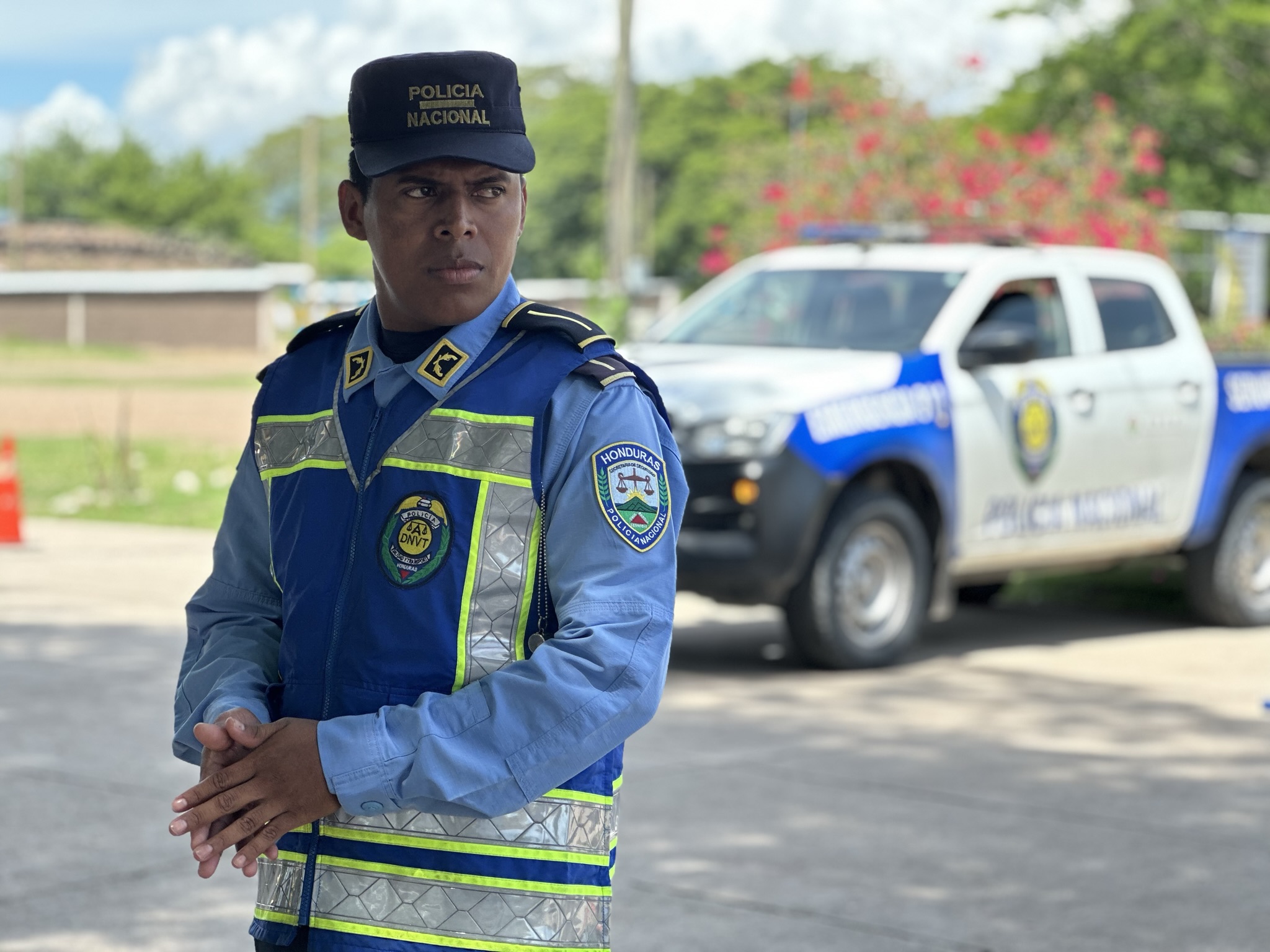
Police officer in the street

How does trauma affect the human behind the uniform?

  • trauma

Guest(s): Karen Treisman, Clinical Psychologist, trauma specialist

In this episode, we speak to Dr Karen Treisman, a Clinical Psychologist specialised in trauma . She has worked with former child soldiers, survivors of the Rwandan genocide, refugees, asylum-seekers and more. We think about the human behind the uniform, clarify what are the different forms of trauma that any police officer or soldier could face in their daily work, and why it is important to talk about it rather than hide it.

Key takeaways
  • Trauma is broader than PTSD. For police and soldiers it’s often ongoing, cumulative, and layered, not just a single past event.
  • Unaddressed trauma leaks out, showing up in harmful behaviors, health problems, and poorer decisions rather than disappearing.
  • Real solutions require a cultural shift: normalising mental health, embedding support, and treating wellbeing as operationally essential.
Download Transcript PDF
Maritie Gaidon
Welcome to Shaping Security, the podcast where we put security governance at the heart of the conversation and update you on today's security challenges.
Extract The Mindful Space
As police officers, unfortunately, we have a habit of just stuffing things down deep inside. We're told on a daily basis that, you know, we're the police and we're the ones who solve the problems, not the ones who have the problems. And we have to, we're in a situation where we're basically forced to be courageous and brave all the time.
Maritie Gaidon
Average European police officers will experience around 2000 traumatic events during their career. That means they fear for their lives or suffer an emotional shock once every two months. Today's episode will help us think about the human behind the uniform, clarify what are the different forms of trauma that any police officer or soldier could face in their daily work and why it is important to talk about it rather than hide it.
I'm with Dr. Karen Treisman, a clinical psychologist specialising in trauma. She has worked with former child soldiers, survivors of the Rwandan genocide, refugees, asylum seekers, and more. She's also an editor of the Journal of Child and Adolescent Trauma.
Hi, Karen. Thanks for being here with me.
Karen Treisman
Pleasure. It's lovely to be here. Thank you for inviting me.
Maritie Gaidon
I'm sure your expertise will add a lot to the show today. So let's start with the first question. When you talk about trauma, people have in mind PTSD, post-traumatic stress disorder.
It's a word that came into use in the 70s after the Vietnam War, but you don't have to be in a war zone to be traumatised. So can you help us understand why PTSD is a narrow lens for defining trauma?
Karen Treisman
Thank you. I think that's a really amazing place to start because there is a lot of misunderstanding and misconceptions. And whilst that can be a really helpful diagnostic term or tool for some people, it also can lose a lot of the wider layers and textures.
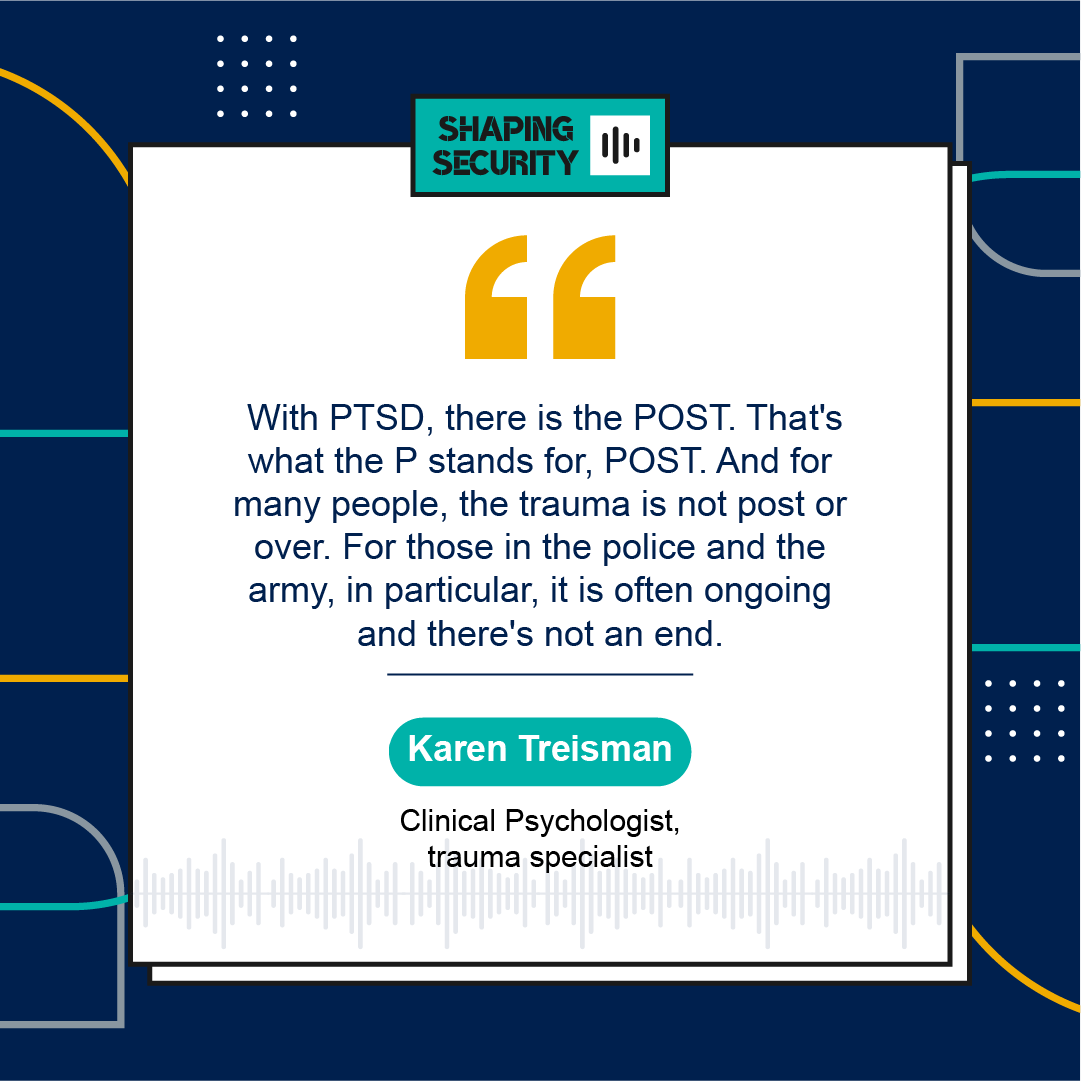
I suppose there's lots of aspects of that. So firstly, with PTSD, there is the POST. That's what the P stands for, POST. And for many people, the trauma is not post or over. It is, particularly within the police and the army, it often is ongoing and there's not an end.
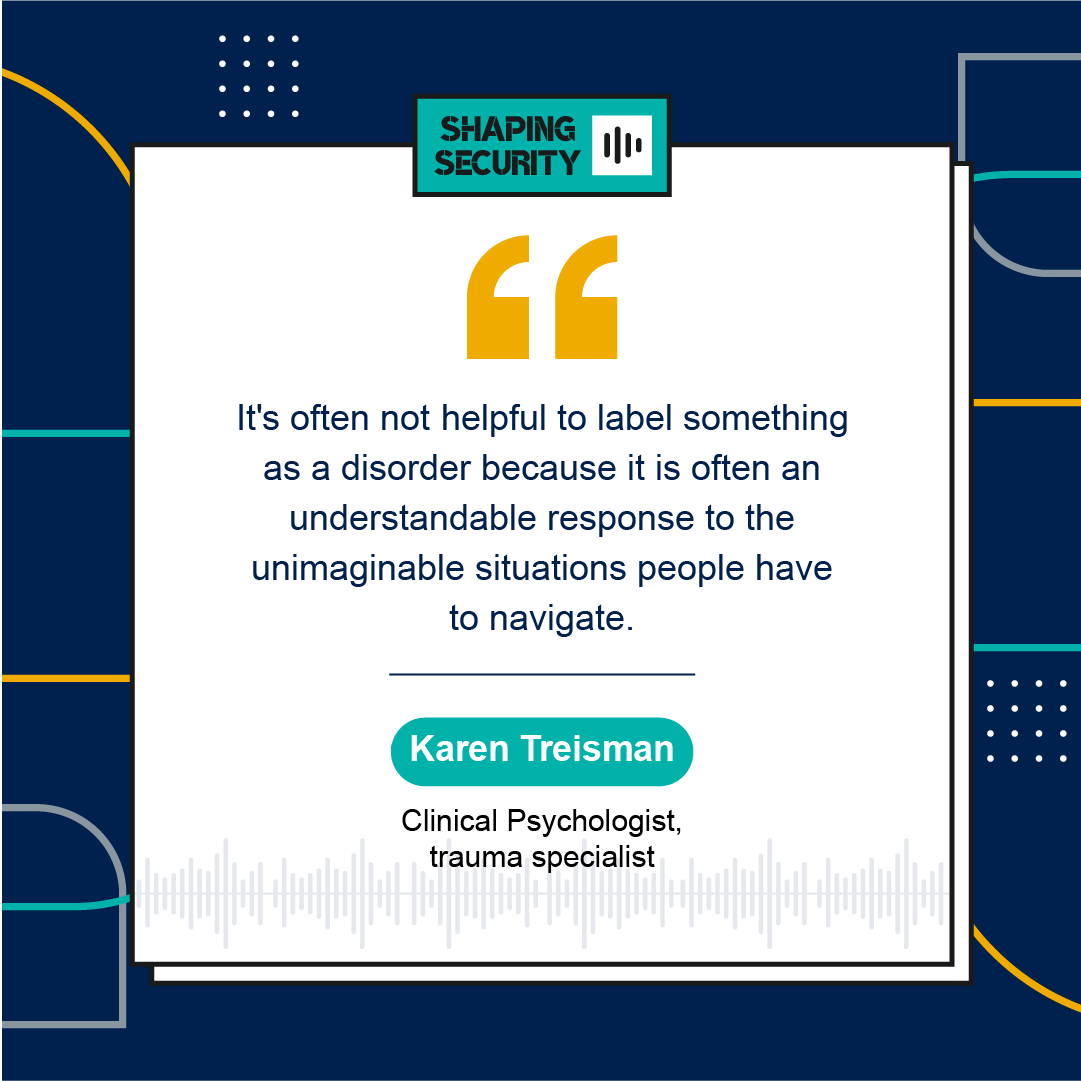
It is that kind of ongoing toll or chipping away. Equally, as we know, it's often not helpful to label something as a disorder because often it's an understandable response or a reaction to unimaginable situations that people are having to navigate. But also, I think with trauma, we often might think about a single event, for example, like a car accident or a robbery, but actually there's a much wider lens of trauma and adversity, hardship, suffering that is about the collective or the community trauma or system or organisational or racial, cultural, the kind of cumulative layered impact that many people in the army or in the police or the security sector experience. So there's so many different levels and layers and also, you know, PTSD comes with a set of certain symptoms that people might experience like nightmares or flashbacks. But as we know, stress and trauma can impact and influence different people in lots of different ways.
And so not everyone who might be impacted or influenced by the work is going to present in a sort of textbook way. So it's really important that we sort of understand the much wider layers that trauma can present in really.
Maritie Gaidon
I really like when you say, you know, that trauma is never over but ongoing, because actually for DCAF with the work of police officer, you know, this is so true. DCAF has worked actually for years in Honduras, a country which has long been considered one of the most dangerous countries in Latin America, with one of the highest murder rates in the world. And also the police are there to solve the problem.
One can still say, you know, that inside every uniform, there is a human being who is affected daily by working in such a high risk environment where they should decide in a second how to react, whether to use force or not. So can you explain what type of pressure it is for them and how it impacts the service they provide to the population?
Karen Treisman
Massively, and just to sort of echo what you were saying, and I've actually done a little bit of support around the projects that you do in Honduras. I think there's that being marinated or immersed in the ongoing, sometimes in the trauma world, we talk about weathering, or the cumulative layered, it's the chip, chip, chip. It's, you know, throughout how much people might have to absorb or like the level of exposure.
So I guess when we think about things from the level of just having to make high stakes decisions, the level of violence and adversity and trauma and death that people might be exposed to, the level of human rights violations or social injustice, what they might feel about how the police are received by the community and around community trauma, some of the racial and cultural trauma, some of the pressure physically, if someone's had a physical injury or having been flooded in that level of adrenaline or cortisol, the level of unpredictability, the pressure, some of the messages around, you know, you have to toughen up or soldier on or not feel, and also operating in system trauma, whatever that might be around the messages or the discourses or not being able to show that.
Some of it will be direct that people experience what they're seeing when they go inside people's houses or going into communities or having to make really painful decisions. But some of that is also the moral injury, having to make decisions that might feel really difficult to make or conflict or jar with your morals. Others, it's what people are witnessing from other people's hurt or pain.
From the sensory level, whether it's from, you know, shouting and screaming and guns and, you know, ongoing change, particularly in Honduras, the political and the cultural, and not just in the current, but that also, there's all the intergenerational trauma from many generations around sort of power and authority. So yeah, I could go on and on, but just so many different layers that they might have to face on an ongoing basis.
Maritie Gaidon
Yeah, how can you explain, you know, also how it really impacts the service they provide? Like, it's really the second part of the question, because you're right, like all this pressure, like after listening to you, like, oh my God, so much more, you know, that I think everyone is usually thinking when we talk about, you know, trauma and police on the daily, you know, task and all of these, what have you seen as consequences?
Karen Treisman
Goodness, so many different ones. And I think it looks really different to different people and at different times. And I also wanted to acknowledge, you know, there's the organisational adverse experiences, but there's also what's going on in people's personal lives and in childhoods and all sorts of things that can be entangled, because as we know, the job doesn't happen in a vacuum.
But some of the things that we might see is some people cope or protect themselves by having to harden their hearts or detach or disconnect. Some people cope by, for example, drinking more alcohol or smoking more cigarettes. Some people become much more reactive.
Some people, brains in pain can struggle to think, so it might be harder to make decisions or might react without thinking. Other people might become quite hopeless or frustrated, disillusioned. It can affect people sleeping, either sleeping too much or sleeping too little.
People's families, you know, that people in our lives at home get what's left of us or the rest of us, not the best. Some people often are feeling on edge, more hypervigilant, harder to settle or harder to relax because they've got constant adrenaline or activated nervous system. It can change your lens, you know, seeing the world as an unsafe place, as a dangerous place.
So many different aspects, becoming more disillusioned. And some people, a lot of people, it shows through the body, you know, that we might not be able to talk about our emotional pain, but it shows through the body of aches and pains or headaches, stomachaches, rashes. There's so many different, and some people, you know, find it really hard to connect with other people.
So it can show itself in so many different ways. Some people might feel less enjoyment or spark for life, just feel exhausted or depleted. It can show itself in lots of different ways in different places, but it really is something that can sort of seep in and be absorbed, even sometimes if people aren't as conscious of it, but there's just a way of, we can't walk through water and not get wet, as Rachel Remen says.
And I guess this work will inevitably have some sort of impact or influence or cost.
Maritie Gaidon
Well, that leads me a bit to the next question, you know. So in 2019, the International Public Safety Association stated that police violence in the United States may be significantly influenced by unaddressed trauma. So in your experience, what is the cost of unaddressed trauma?
How it can be calculated?
Karen Treisman
Wow, yeah, that's a big question. And again, it will show itself in different ways. And I think there's individual, there's family, there's organisational, there's collective.
But I think if there is a conspiracy of silence or squashing things down or not talking about the elephant in the room, it can lead to lots of unintended consequences. And I think that's on top of a history of often people feeling or being silenced, or in cultures where feelings can't be spoken about, or they're positioned as, you know, being soft, and all of those quite unhelpful discourses. So I think lots of things can happen.
Firstly, I mean, James Baldwin, in the context of racism said, not everything faced can be changed, but nothing that isn't faced can be changed. So I think there's something about how can you move forward, or support if something isn't named in psychology, there's someone called Dan Siegel, who we say name it to tame it, or express to address it, as someone called Cathy Malchioldi says. But I suppose what we know is, if things aren't addressed, they still come out, it's not like they go, if you push it under in one way, it comes out in another way, it spills and leaks out.
And that might be, for example, that it might lead to more stigma, or more shame, it might lead to, unfortunately, in the worst case scenario, and I'm not doing a direct link, but with people expressing or showing that through suicide, it can lead to that with it coming physically, you know, the body remembers the body holds the score that it comes out in physical health conditions, you know, trauma can hugely impact our immune systems.
If it's not spoken about, it also can come out in your home life with how you are in your parenting or in your relationships or with friendships. It can come out with people feeling isolated and alone and disconnected. And it also comes out in behaviours.
And we know, for example, within the police and the army, it can come out in all sorts of the behaviours using unnecessary force, it can come out in being more reactive, it can come out in having your heart hardened, it can come out in being less curious, it can come out in being harsher, it can come out as treating people in a dehumanising way, or in a very feminist way. It can come out in how people are with their colleagues and creating a culture within the organisation, it can make people more detached, it can come out in other ways, as I said before, with, for example, drugs and alcohol. So there's so many ways that if it's not spoken about, not only can it not be responded to or addressed, but it kind of pops up in other ways.
And I think that's really the hazard. But also, it really creates and adds into that culture of we can't talk about things, and we're alone in that sense. And I think so often, it is so important for people to feel seen, acknowledged, and that it's not positioned in them that this is an occupational hazard.
This is an expectation that people aren't machines or superhuman, and that it's understandable to feel those things. But yeah, if we don't talk about it, then it can be alienating, it can come out in other ways, we can be blaming and shaming. And also, then there's no avenues to do something about it or to support people, really.
Maritie Gaidon
But then what would you advise? You know, what should security institutions do to address and prevent mental health issues? Do you have two recommendations for us?
Karen Treisman
Yeah, I mean, that is such a big question. And we could spend years talking about that. And we have written a report a little bit.
And again, there isn't a one size fits all or a quick fix, because this is messy and muddy and multi-layered. I mean, from my own bias, I think that's where trauma-informed or infused system change makes such a huge difference. But I suppose the most important thing first is talking about it, like what we're doing now is acknowledging, is realising, is shining a spotlight and a torch on it and actually having conversations that are infused in meetings and corridor conversations, normalising the toll of the emotional heavy lifting of the work, helping people to understand and normalise the expectation that we can't walk through water and not get wet, not positioning it as you're not tough enough, or you're weak, or you're not struggling, but actually sort of thinking about framing it as an occupational hazard and sort of creating a space where it's named and it's acknowledged. So I think that is a huge element. And thinking about from an organisational level, how is that lens put into the procedures from when there has been an incident or around recruitment or training or induction?
How are we supporting people to understand about secondary vicarious trauma, compassionate fatigue, moral injury, normalising and validating, but also teaching people tangible skills and tools about how they might on a micro dosing. So not that once a year that you're going on holiday, or you're going to go to the gym, or you're going to meet with friends, but on a daily basis, micro dosing, what different things that we can teach people to help reset their nervous systems. But yeah, getting organised, thinking about the organisational culture is so important.
You know, is this a culture that actually sees the human and the person behind the behaviour? Is this a culture that acknowledges that we want people to be able to feel, but it's finding that balance because people still need to be able to do the work. And when there are behaviours that are occurring, to be curious instead of furious about why are we seeing patterns of officers behaving in a particular way?
Like, what are the expectations? And what are we doing to support people to have some skills to support that?
Maritie Gaidon
Thank you. I think your inputs really made it clear on the idea of accepting the trauma as something normal, you know, that everyone has to deal with, and the fact that it should be entrenched, not only in the culture of the individual culture, but also the organisational culture. This is not a second thought, you know, this is something normal.
Karen Treisman
Yeah, absolutely. And that organisations can add to that stress or add to that harm. So having a culture where it is positioned in a person or shamed or blamed or fingers pointed, whereas actually, you know, this job comes with so many additional considerations.
It is a different job, it's not going being a dog walker or working in a florist. I'm not saying those things don't have additional stuff. But actually, if we understand what it's like to work in the day to day and the level of exposure and the level of suffering and hardship and the level just that people's bodies go through, from a multi sensory experience from the level of adrenaline, from the level of cortisol.
If we can just acknowledge that, then we're like you would pay attention to your physical health and your physical immune system. We can also pay attention to our emotional immune system and not position it as rainbows and fairies that it is an ethical duty to be able to, you know, then be able to be present for other people. It's that well being leads to well doing as one of the projects in Kenya, the wellness project says.
Maritie Gaidon
It's equal duties. I think we will keep this for for the end of the podcast. Thank you really again for being part of the show here.
Karen Treisman
My absolute pleasure. Thank you. And thanks to everyone for listening.
Maritie Gaidon
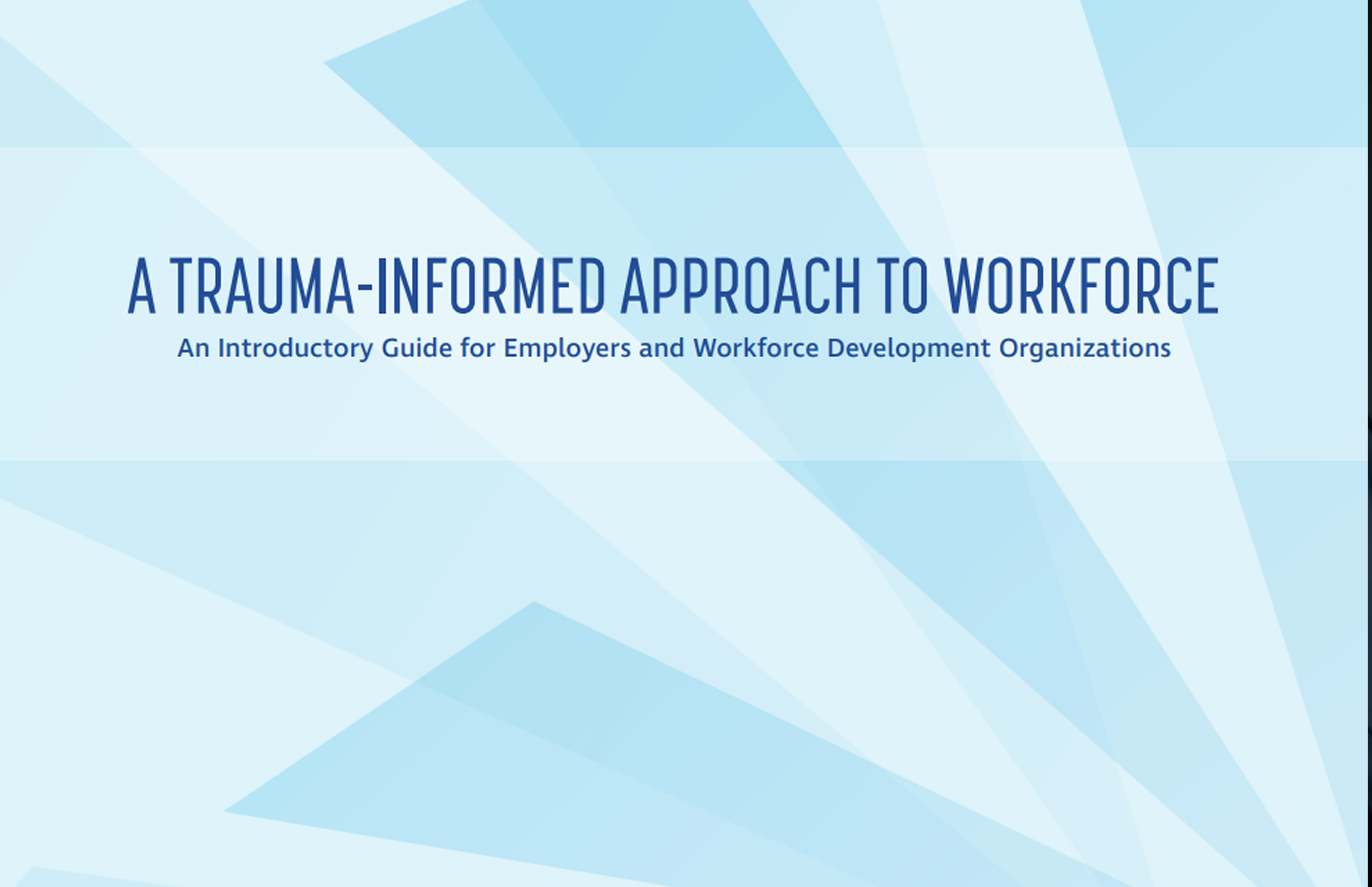
And for our listeners, the link to Karen's website will be in the episode's notes. Be sure to check it out if you want a better idea of the vast amount of services she provides. Karen has worked with DCAF to create a comprehensive guide explaining how to address trauma and police reform.
It includes a practical checklist of questions to consider when designing or implementing reforms. Don't miss it. The link is on the podcast page on our DCAF website with many other useful resources on the topic.
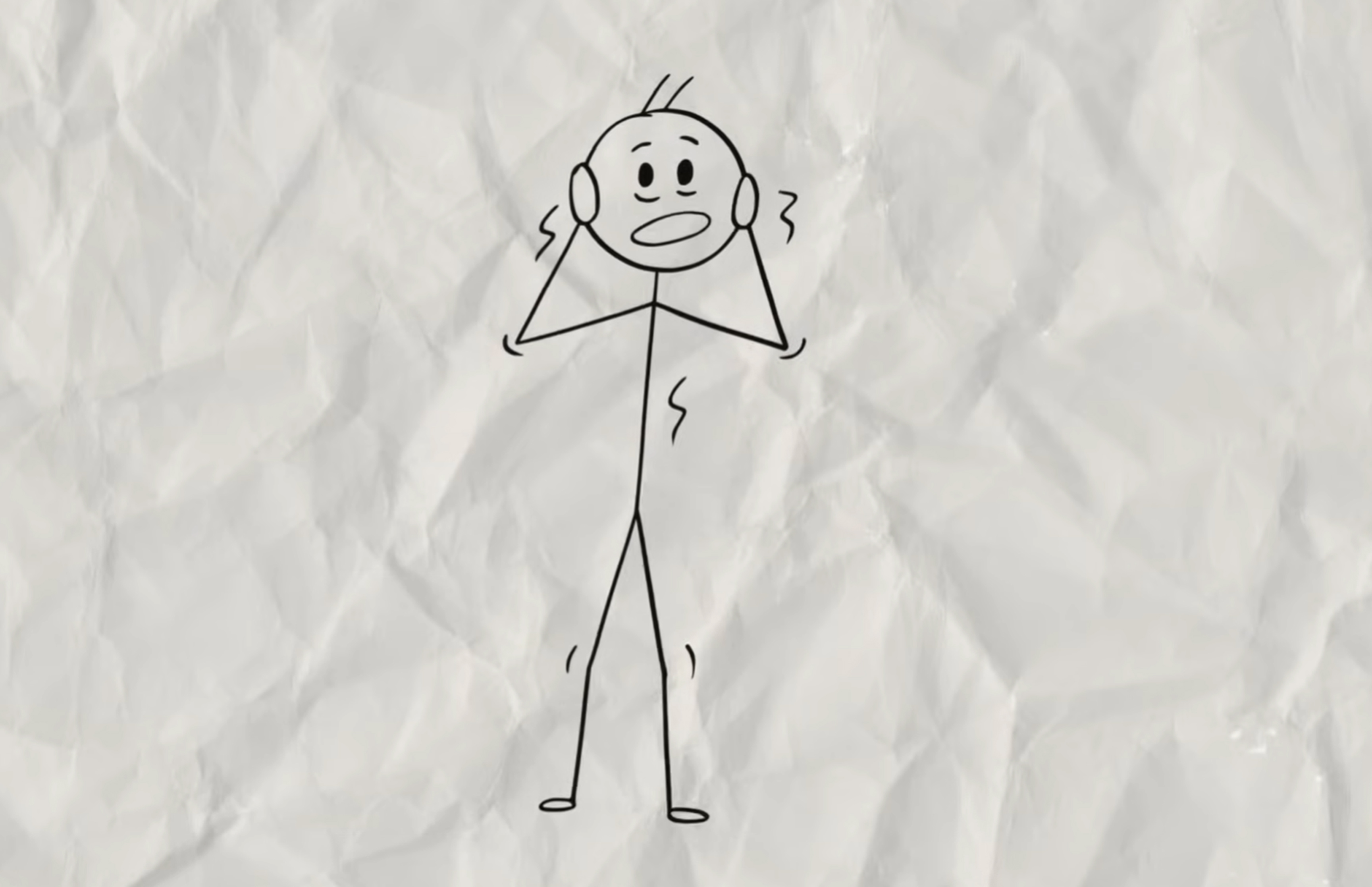
Before you go there, stay with me. I will briefly introduce two other must watch and must listen pieces of content. We talk about the psychological effects of trauma, but what is really happening to our bodies.
The video I found for you explains 12 ways in which your brain reacts to trauma and the impact this has on your body. It's very practical and easy to understand. Don't worry.
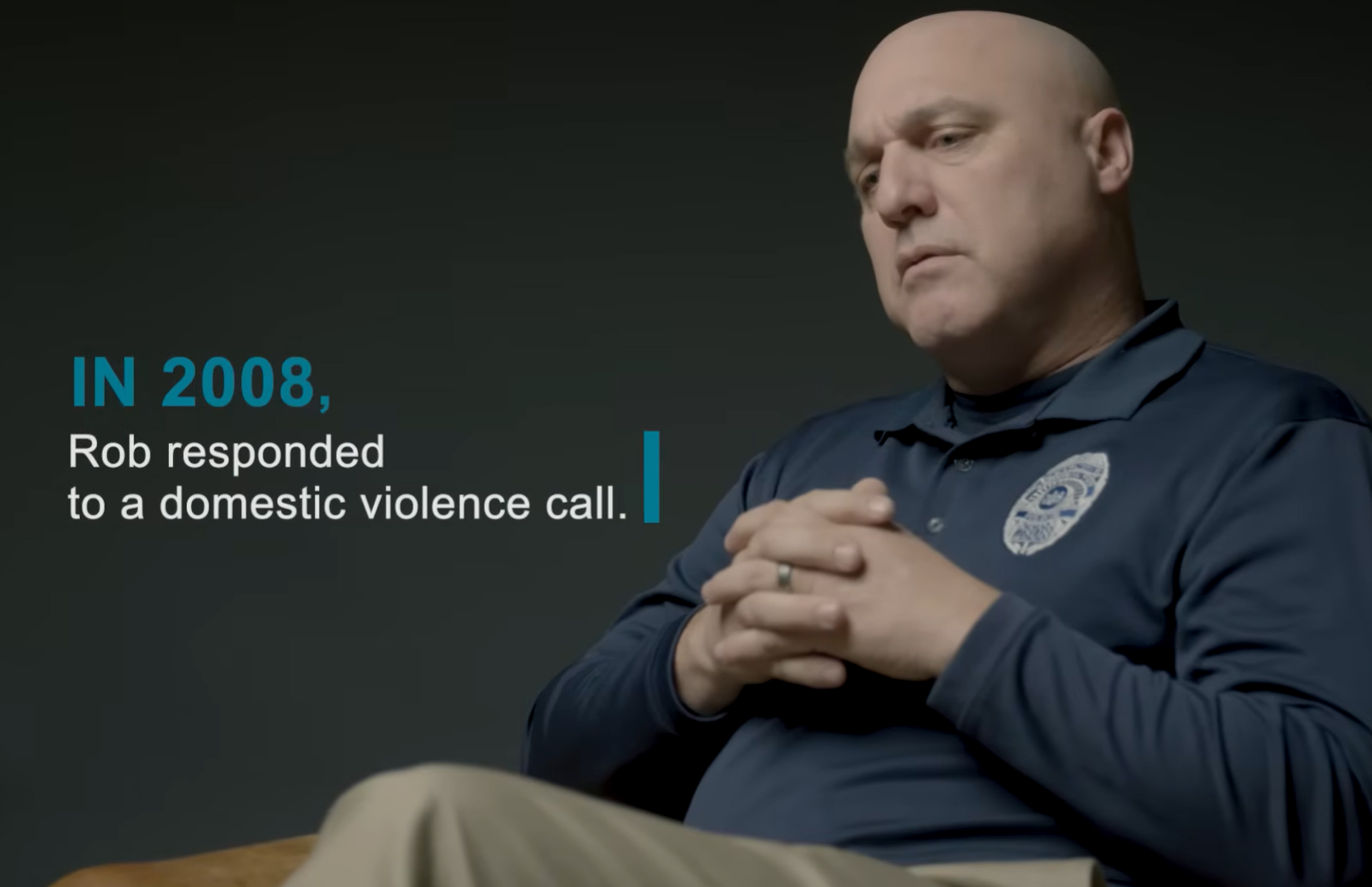
It's from Inspire and Thrive, a YouTube channel that creates simple animated videos about trauma and mental health. The second resource is the content created by OC87 Recovery Diaries. They have a wide variety of content, primarily videos and podcast series.
The common theme is sharing stories about mental health, recovery and change. They have several stories about people who work in security institutions. For example, one story is about a police service veteran in Canada who nearly took his own life.
He still works for the police, but now as a wellness officer, supporting his colleagues in overcoming their psychological hardships. It's an amazing story. You will find these two links in the episode description.
Additional resources on trauma and security institutions can be found at dcaf.ch. Thank you for listening to Shaping Security, the podcast where we put security governance at the heart of the conversation and update you on today's security challenges. If you enjoyed the podcast and would like to support us, please share it with a friend or leave us a review on your preferred podcast platform. You can find out more about dcaf on our website and our social media channels.
We also have a monthly newsletter that shares our latest resources. Don't miss the next episode of Shaping Security.
Recommended resources:
Close

Download this quote and share it on your preferred social media network.